
Airflow Problems in Ducts
Ductwork Repair & Duct Sealing
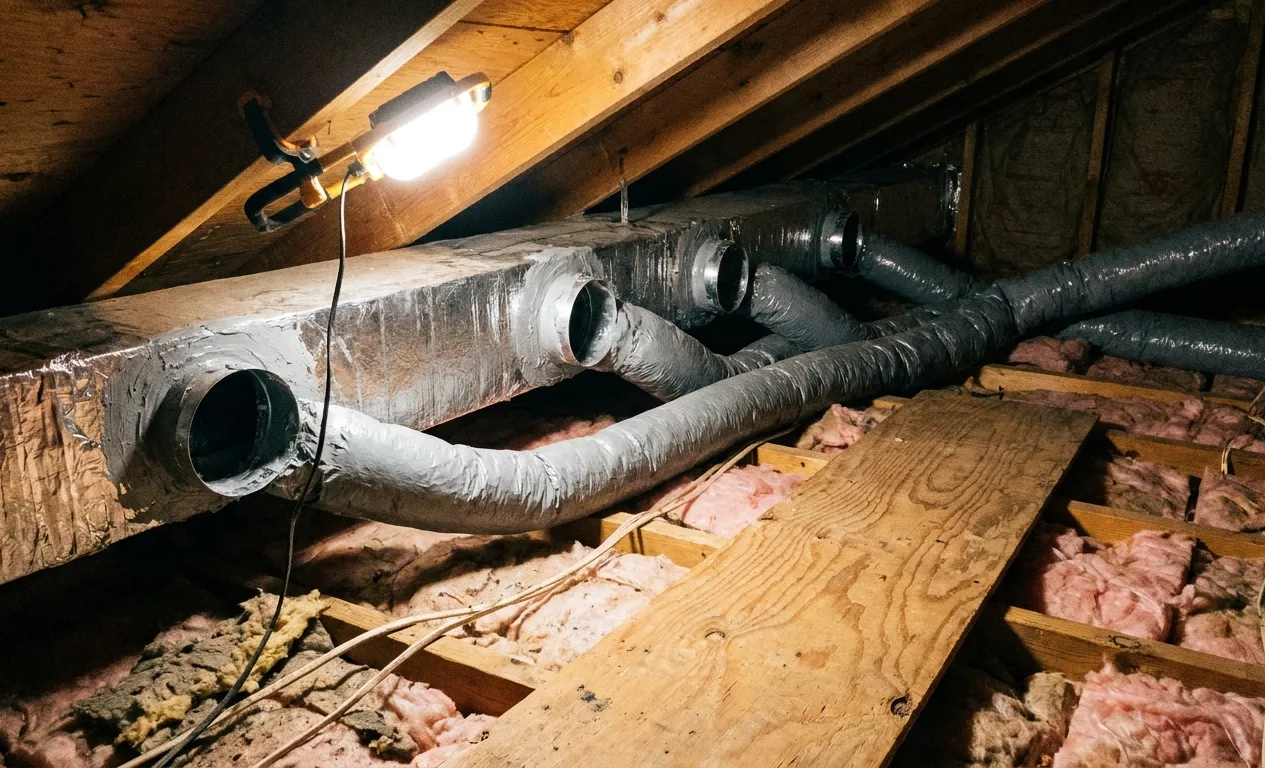
Disconnected flex in attics, crushed runs, and seams taped instead of sealed let conditioned air escape before it reaches the rooms. These issues create hot and cold spots plus higher utility costs.
Signs Ducts Need Attention
Registers whistle when the blower runs because air is forced through gaps or pinched sections. That noise means the system works harder.
Dust builds up on surfaces even with clean filters when return ducts leak and pull particles from attics or crawl spaces into the airstream.
Some rooms stay warmer or cooler than the thermostat setting when trunk lines leak or returns are too small for the equipment airflow rating. Leaks do that, the sort of duct issue Mancini Heating & Cooling traces on repair calls.
Common Duct Issues We Find
Technicians look for these problems during a full inspection of the duct system.
Attic and Crawl Space Runs
- Flex duct disconnected at collars
- Crushed sections under insulation
- Missing or damaged outer vapor barrier
- Ducts resting on sharp framing edges
- No support straps every four feet
Sealing and Insulation Problems
- Cloth tape failing on trunk seams
- Mastic needed instead of tape
- Thin insulation on supply lines
- Sweating ducts in humid crawl spaces
- Gaps at register boots into floors
After locating leaks, we measure total external static pressure and airflow at each register. To confirm the fix restored design performance. Before closing the system.
Typical Static Pressure Readings
| System Condition | Measurement |
|---|---|
| Clean filter, open dampers | 0.5 inches water column |
| Dirty filter or closed dampers | Over 0.8 inches water column |
| Leaky return side | Low supply pressure |
| Collapsed flex section | High pressure at furnace |
| Balanced after sealing | Returns to design value |
Undersized returns starve the blower and raise total static pressure. What happens next? Adding or enlarging returns often brings the reading back into the equipment's rated range.
Balancing dampers let us adjust airflow room by room once major leaks are sealed so no area gets shortchanged.
Repair Process
We start at the air handler or furnace and work outward. Checking every joint and run for separation or compression. Mastic is applied to seams while metal tape holds insulation in place on attic ducts.
In crawl spaces we add insulation to cold ducts (and check for any standing water near the lines) and route condensate lines away from equipment to prevent moisture issues on metal surfaces.
Sealing and support work restores intended airflow. Once repairs finish we recheck register velocities to confirm each room receives the correct share of total system capacity.
Questions About Duct Sealing
Can duct leaks raise my energy bill?
Yes. Air escaping through unsealed seams or disconnected runs means the equipment runs longer to maintain the set temperature. Closing those gaps reduces runtime and improves room-to-room balance.
Do you replace entire duct systems?
We repair sections where possible and replace only the damaged runs. Full replacement is discussed only when multiple trunk lines show widespread deterioration or incorrect sizing.
How do you test airflow after repairs?
Technicians measure static pressure at the equipment and velocity at registers with a calibrated meter. Readings are compared to the original design values before and after the work.
Ductwork Repair often pairs with Ductless Mini-Split Service when additions lack central ducts. We handle both on homes across most of the United States.
Schedule Ductwork Repair
Tell us which rooms feel off and we will check the ducts that serve them.
Call (888) 205-1096