
Replacing an Older Furnace
Furnace Installation & Replacement
We size the new furnace to the existing duct system and AC coil while updating the gas line, venting, and controls. The goal is steady heat output without raising static pressure or shortening equipment life.
Efficiency Ratings and Venting Updates
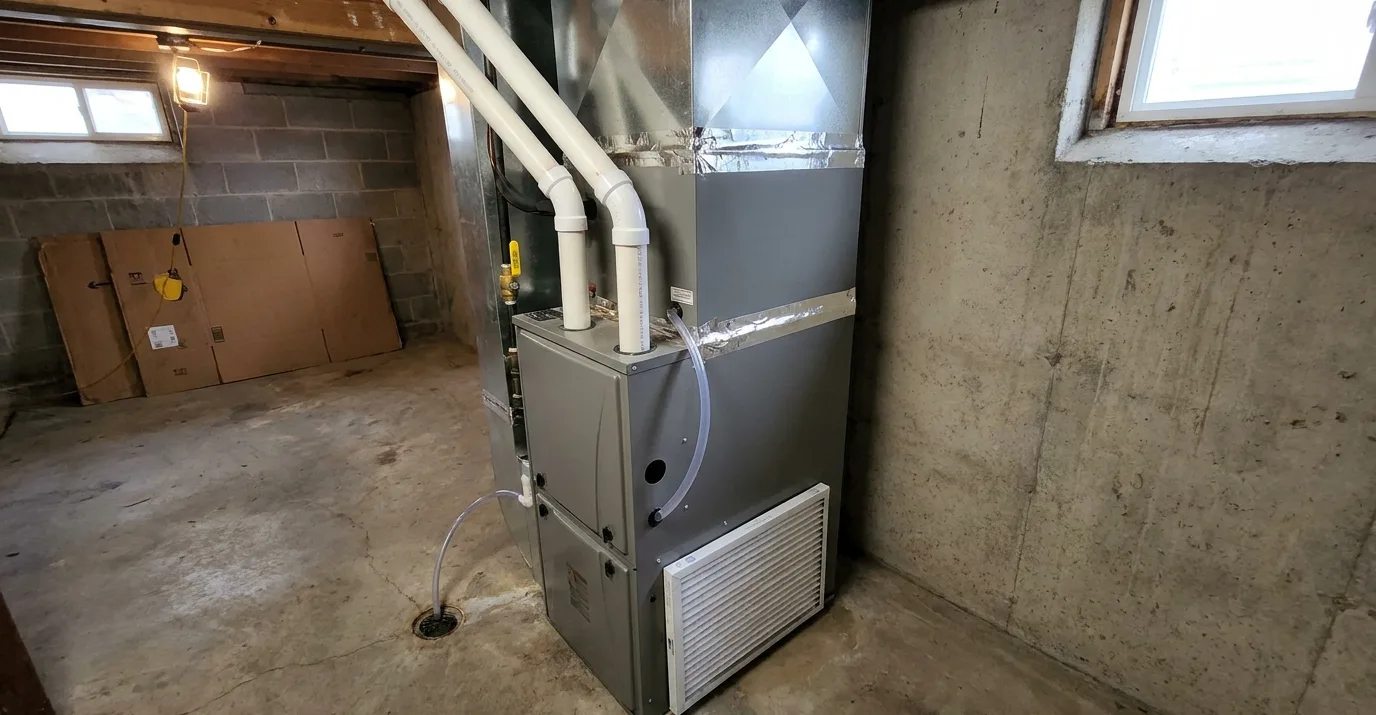
Most homes we see have the furnace tucked in a basement or closet. Getting to the vent is half the battle. You run into this when the old unit used a chimney. But switching to high efficiency means pulling in fresh air through one PVC and sending exhaust out the other. Why slope the pipe? So condensate flows into the drain instead of pooling. No shortcuts. And sometimes the wall penetration lands right where a window is so we have to reroute the whole thing and that takes extra time figuring out a clean route around the joists and insulation.
We measure the return air opening and calculate static pressure before choosing the cabinet width.
During startup we set the temperature rise by adjusting blower speed so the furnace operates inside the manufacturer's range. Combustion analysis confirms proper gas pressure and draft before we leave the site.
Gas Valve and Blower Options
Valve staging and blower speed affect comfort and duct performance on every install.
Gas Valve Stages
- Single-stage runs at full input only
- Two-stage drops to low fire for mild days
- Modulating adjusts in small increments
- Low fire improves humidity removal in fall
- Full input reserved for design temperature
Blower Motor Types
- PSC motor has fixed speeds
- ECM variable-speed matches static pressure
- Lower continuous speed improves filtration
- Soft start reduces duct noise
- Matches evaporator coil airflow needs
We also verify the gas shutoff valve and sediment trap meet code before lighting the unit. Proper sizing keeps pressure drop low when the furnace and water heater run together.
Matching the Furnace to Existing Equipment
| Component | Check During Install |
|---|---|
| Return air opening | Measure square inches and static |
| Evaporator coil | Confirm tonnage and drain slope |
| Gas line size | Verify capacity for new BTU input |
| Thermostat wiring | Add C wire if needed for controls |
| Condensate pump | Test float switch and outlet |
The furnace blower must deliver the correct cfm across the existing evaporator coil. Too little airflow raises refrigerant pressure and reduces cooling efficiency; too much creates temperature stratification in the ducts.
We check the coil for prior refrigerant leaks or restricted passages while the panels are open. Any issues get addressed before the new furnace is fired.
Startup and Handover
After the furnace is running Mancini Heating & Cooling records manifold pressure, temperature rise, and CO readings. These numbers become the baseline for future service visits.
We show the homeowner how to change the filter and explain what the new thermostat settings mean for staging and continuous fan operation.
Proper setup prevents short cycling. We adjust the thermostat algorithm to the new valve staging so the furnace does not short cycle on mild days.
Questions About Furnace Replacement
Do all high-efficiency furnaces need PVC venting?
Yes. Any furnace above 90 percent AFUE produces condensate and must use PVC for both intake and exhaust because the flue gas is cool enough to condense inside a metal pipe.
How do you match the new blower to my AC coil?
We calculate required cfm from the coil tonnage, then set the variable-speed motor to deliver that volume at the measured external static pressure. This keeps the coil in its design range.
What happens to the old chimney liner?
When switching to a condensing furnace we abandon the chimney and run new PVC pipes instead. The old liner stays in place but is no longer used for combustion products.
For homes that need updates to both heating and cooling, we can coordinate Furnace Installation with Heat Pump Installation during the same visit.
Book Furnace Installation
Tell us your current furnace model and AFUE rating so we can plan the correct replacement.
Call (888) 205-1096