Furnace not starting right
Gas & Electric Furnace Repair
It starts with the furnace failing to light on a cold morning and then you notice the cold air coming from the vents so the lockout is active. Simple. But the board code tells us right away if it's the sensor or something else in the circuit. Our technicians trace the symptom straight to the root issue on site.
Typical Furnace Failure Points
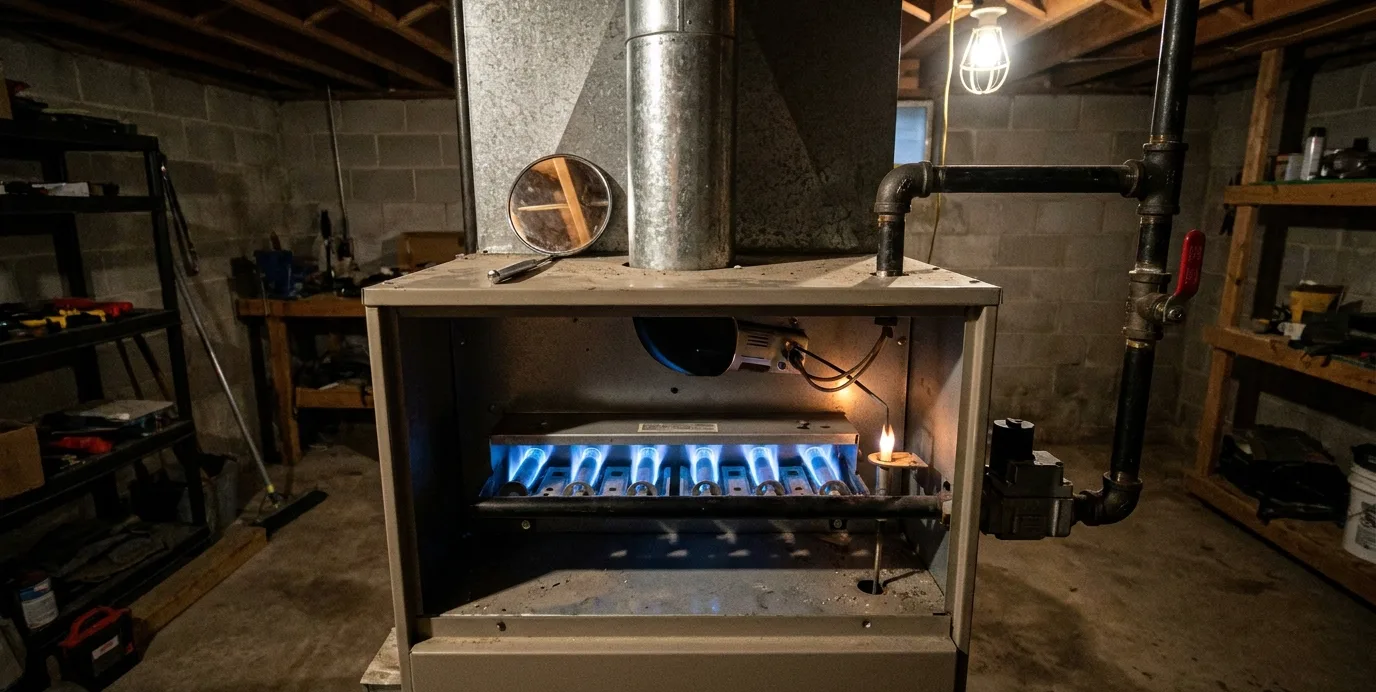
A furnace that lights then shuts down after a few seconds usually has a flame sensor coated with white oxidation. Wiping the rod with emery cloth restores the microamp signal to the board and stops the lockout without swapping parts.
High efficiency units collect water in the condensate trap until the pressure switch opens. Clearing the trap and the clear vinyl hose lets the inducer pull the right draft again so the burners stay on through the cycle.
Hot surface igniters crack from repeated heat cycles and stop glowing even when 120 volts reaches the terminals. Swapping the igniter restores combustion without touching the gas valve or board.
Parts We Check First
We start with the lowest cost items that fail most often and move to the blower and safety circuit only if those test good.
Ignition and flame circuit
- Flame sensor rod cleaned or replaced
- Hot surface igniter resistance test
- Gas valve coil voltage check
- Control board flame signal reading
- Spark igniter gap measurement
Draft and safety switches
- Inducer motor amp draw test
- Pressure switch hose for cracks
- Rollout switch continuity check
- High limit switch opening temperature
- Blocked vent or flue inspection
After the ignition and safety items pass, we at Mancini Heating & Cooling check blower capacitors and motor windings. But a weak capacitor lets the blower run yet moves too little air across the heat exchanger, which trips the limit switch on every call for heat.
Combustion and Heat Exchanger Tests
| Measurement | Normal range |
|---|---|
| Flame signal | 1.5 microamps or higher |
| Inducer draft | 0.4 to 1.5 inches water column |
| Temperature rise | 30 to 70 degrees F |
| CO in flue | Under 100 ppm steady state |
| Heat exchanger | No cracks under inspection camera |
We pull a combustion sample after any gas train work. Elevated carbon monoxide points to a cracked heat exchanger or poor draft, both of which require the unit to stay off until corrected.
Venting on 90 percent furnaces must slope back toward the unit so condensate drains instead of pooling and restricting flow. We verify slope and termination clearances on every repair.
What Happens During the Visit
Technicians remove the front cover, note any stored fault codes, and isolate power before testing live circuits. They carry common parts so most igniter or sensor repairs finish in one trip.
Once the furnace runs through a full cycle we verify temperature rise and combustion numbers again. The homeowner receives a written list of what was replaced and what still needs attention on the next maintenance visit.
We never bypass a safety switch to get heat running. A shorted limit or rollout switch masks a real problem that can send combustion gas into the house. We replace the switch and locate the cause of the trip.
Why does the furnace keep locking out?
Can a dirty filter cause lockouts?
A plugged filter reduces airflow so the heat exchanger overheats and opens the limit switch. The board records the fault and prevents another ignition attempt until the filter is changed and the switch cools.
How often should flame sensors be cleaned?
Most residential furnaces need the flame sensor wiped with emery cloth once a year during maintenance. In dusty homes or where the unit runs many hours, cleaning every six months prevents nuisance lockouts.
Is a blinking red light always a bad board?
The code usually points to a failed sensor, switch, or motor first. We test each item the code describes before replacing the board, which keeps repair costs down on the majority of calls.
Routine checks on venting and the heat exchanger keep gas furnaces safe in any climate. We also handle Heat Pump Repair when the heating load shifts to milder seasons.
Schedule Furnace Repair
Tell us the control board code or the exact symptom and we will bring the most likely parts on the first visit.
Call (888) 205-1096