
Dust Allergies and Stale Air
Indoor Air Quality Solutions
Homes trap dust, pollen and excess moisture that trigger allergies and that closed-in feeling. We look at how the system moves air, where moisture collects, and what simple changes improve breathing without cutting airflow.
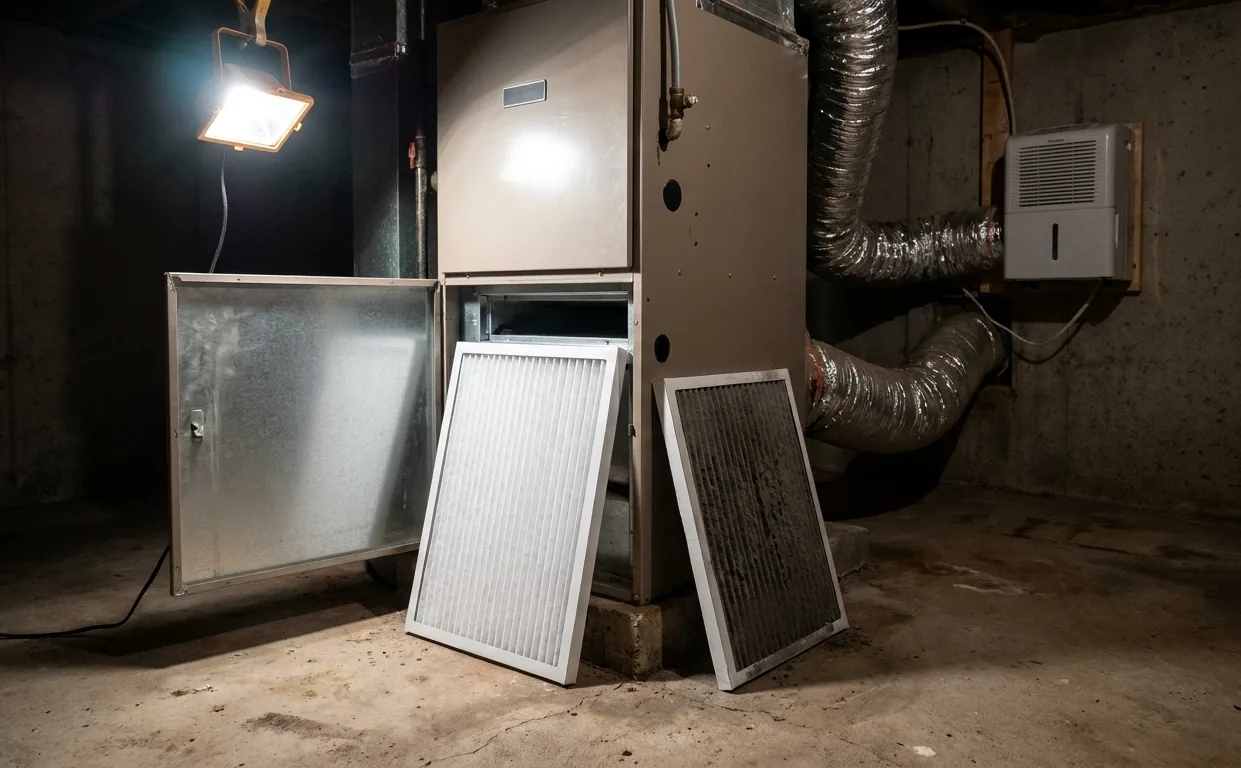
Where Particles Collect
Return grilles pull in dust that settles on coils and in duct walls. Over time this buildup reduces airflow. It feeds musty smells when the blower runs. A technician checks the evaporator coil and drain pan first. Standing water there grows mold quickly. Happens fast.
On top of that high-MERV filters catch smaller particles but can restrict airflow if the cabinet is too small. We measure static pressure before and after a filter change so the furnace or air handler still moves the right amount of air across the heat exchanger.
Crawl-space ducts with leaks pull in soil and moisture. Sealing those joints stops the system from circulating dirt every cycle and keeps the air handler from working harder than it should.
Filter Choices and Tradeoffs
Media cabinets and filter ratings affect both cleanliness and system performance.
MERV Ratings Explained
- MERV 8 catches basic dust and lint
- MERV 11 handles most household allergens
- MERV 13 removes finer particles but needs space
- Check pressure drop after installation
- Replace on schedule to protect the blower
Cabinet Options
- Four-inch media holds more dirt than one-inch
- Five-inch cabinets fit in many return plenums
- Bypass dampers prevent airflow restriction
- UV lights at the coil reduce biofilm
- Float switches protect against drain clogs
We install the cabinet that fits the existing duct and still lets the blower reach its rated airflow.
Moisture and Fresh Air
| Device | Best Use |
|---|---|
| Whole-home dehumidifier | Humid Southeast summers |
| Bypass humidifier | Dry winter forced-air heat |
| Steam humidifier | Tight homes with short run times |
| ERV unit | Newer sealed construction |
| HRV unit | Cold climates needing ventilation |
Whole-home dehumidifiers tie into the return duct and remove moisture after the air conditioner has done its job. In the Southeast this keeps indoor levels near 50 percent so coils stay dry and mold does not form on surfaces.
Dry furnace air in winter cracks skin and wood, but a bypass or steam unit adds moisture back into the supply air at a controlled rate so windows do not sweat and static stays low, something Mancini Heating & Cooling sees often in colder months.
Ventilation and Coil Treatment
Tight houses trap carbon dioxide and cooking odors. An ERV or HRV brings in fresh air while transferring heat or coolness so the furnace and air conditioner do not run extra cycles. We size the unit to the number of occupants and square footage. And the blower still moves the right amount of air. UV lights mounted near the coil break down organic growth on the fins. They do not replace cleaning but cut the musty smell that starts in the drain pan when water sits too long.
But the growth returns if the drain line stays clogged.
Duct leaks in a dirty crawl space pull in mold spores every time the blower runs. Sealing those joints and adding insulation stops the contamination at the source and improves overall system efficiency.
Common Questions About Air Quality
Will a higher MERV filter harm my furnace?
Only if the cabinet is too small for the airflow the blower needs. We measure static pressure first. Does the motor stay within safe limits? Yes when we pick the right filter depth and rating that still catches the particles you want removed.
How does a whole-home dehumidifier differ from the AC?
The air conditioner cools and removes some moisture, but a dedicated dehumidifier runs longer at a higher temperature set point. It keeps humidity low without overcooling the house in shoulder seasons.
Do UV lights replace filter changes?
No. UV treats growth on the coil but does not catch airborne dust. Regular filter replacement still protects the blower and keeps the rest of the system clean.
When humidity or dust problems persist after these steps, we can also handle Boiler Repair on the same visit.
Schedule Indoor Air Quality Work
Tell us what you notice about the air in your home and we will check the system and recommend the right fixes.
Call (888) 205-1096