
Low Charge Means a Leak
Refrigerant Leak Detection & Repair
A system that loses refrigerant each summer has an actual leak. Adding more gas masks the problem and lets the unit run with too little oil in the compressor, which leads to bigger failures.
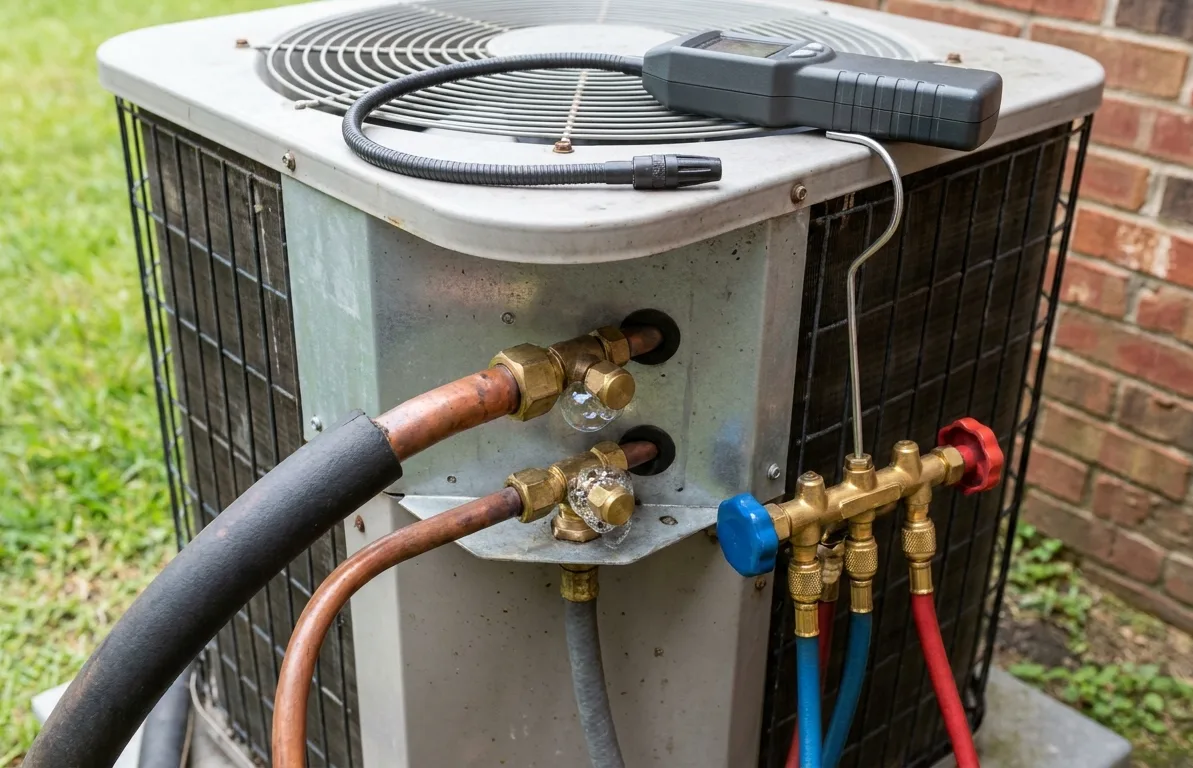
Where Leaks Usually Show Up
Evaporator coils inside the air handler develop pinholes from years of moisture and temperature swings. The leak shows up as low suction pressure and warm air from the vents during peak load. But dust on the fins holds moisture right against the copper. Pinholes. And it leaks slowly at first - then the flow picks up once the hole grows bigger.
Schrader valves and flare fittings on service valves loosen over time or crack from vibration. A technician can often tighten or replace the valve core without opening the whole system.
Line sets that rub against framing or ductwork wear through the copper wall. The rub mark is usually visible once the insulation is pulled back during the inspection.
How We Find the Leak
Electronic detectors sense small amounts of refrigerant in the air around joints and coils. We follow up with bubble solution or UV dye to confirm the exact spot before any repair.
Tools We Use on Site
- Electronic leak detector wand
- Nitrogen regulator and gauges
- UV dye injector kit
- Bubble solution bottle
- Recovery machine with scale
Steps Before Any Repair
- Recover remaining refrigerant
- Pressurize with nitrogen
- Hold test for twenty minutes
- Mark every leak location
- Evacuate to below 500 microns
Once the leak is confirmed we decide whether brazing a joint or replacing the coil makes more sense. We always recover refrigerant first and never vent it to the air.
Older Systems Versus Newer Refrigerants
| System Type | Leak Repair Notes |
|---|---|
| R-22 units | Parts harder to find, leak often means full coil swap |
| R-410A systems | Higher pressure needs careful brazing with nitrogen |
| New A2L refrigerants | Mildly flammable, requires updated recovery equipment |
| Heat pump reversing valves | Internal leaks need valve replacement |
| Mini-split flare nuts | Retighten or replace gaskets and retest |
R-22 systems from before 2010 often develop leaks in the evaporator because the older coils were thinner, so many of these units now need the coil changed rather than patched when Mancini Heating & Cooling gets the call.
Newer A2L refrigerants like R-454B and R-32 run at similar pressures but need different leak detection settings and recovery cylinders rated for the gas.
When Replacement Beats Repair
If the evaporator coil has multiple leaks or the leak is inside a welded joint that cannot be reached, we replace the coil. The cost of repeated visits quickly exceeds the price of the new part.
Outdoor condensers with leaking service valves can sometimes be repaired by changing the valve body, but a cracked coil header means the whole outdoor unit comes out.
Topping off without repair is not a fix. We locate the leak, repair or replace the part, then weigh in the correct charge so the system runs at design pressures.
Questions About Refrigerant Leaks
Why does my unit need refrigerant every summer?
A closed system should not lose refrigerant. The only reason for low charge is a leak somewhere in the coils, valves, or line set. Repeated top-offs let the compressor run dry and fail.
Can you just add dye and watch for the leak later?
Dye helps confirm a spot we already suspect, but we still pressure test with nitrogen first. Dye alone does not replace a proper electronic detector sweep and visual inspection of every joint.
Is brazing always the right fix on copper lines?
Brazing works on accessible joints when the copper is clean. When the leak is inside the evaporator or condenser coil we usually replace the whole component instead of trying to patch it.
Call for Refrigerant Leak Repair on your air conditioner or heat pump. We handle the recovery, pressure test, and fix so the system holds the correct charge without repeated AC Repair visits.
Schedule Refrigerant Leak Repair
Tell us the symptoms and we will check pressures and locate the leak.
Call (888) 205-1096