
Control Updates for Any System
Thermostat Installation & Wiring
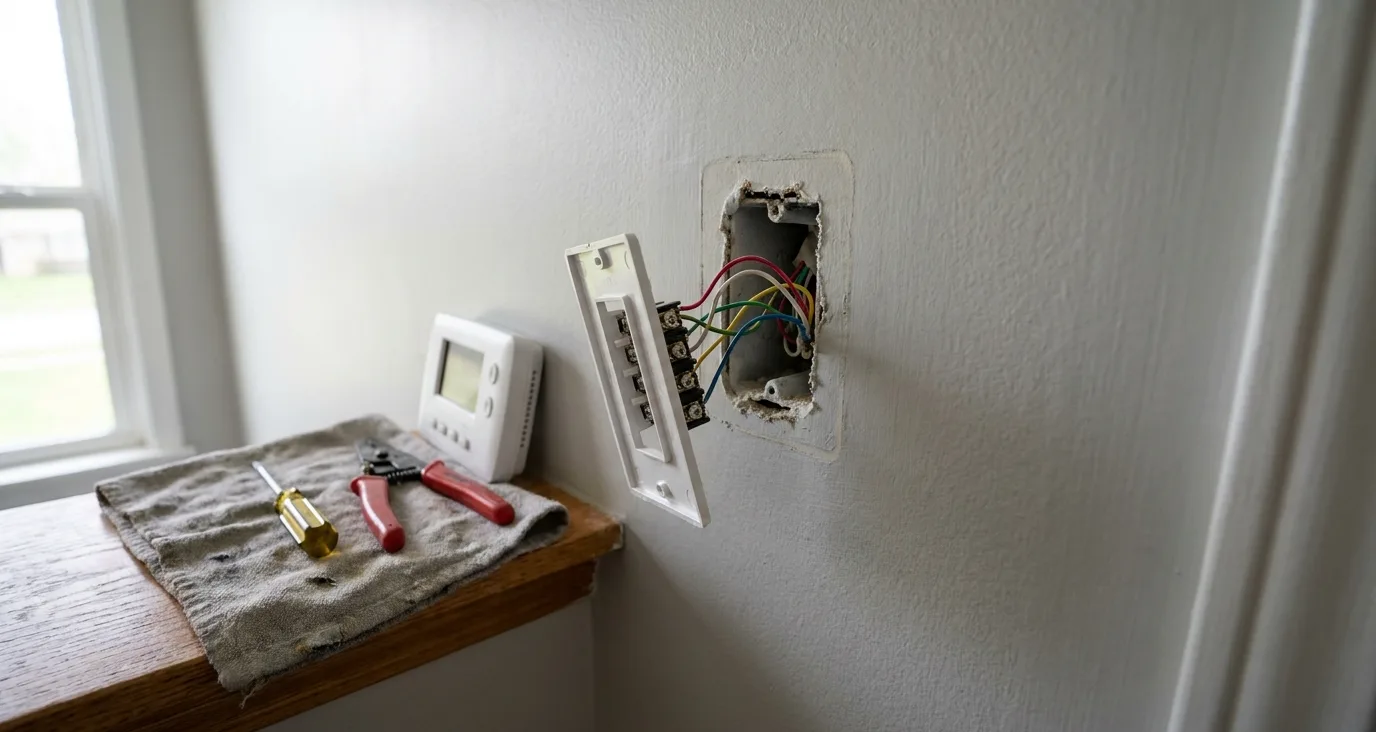
Sensors matter. Old thermostats with mercury bulbs or simple dials often fail to hold temperature or work with modern equipment so we check the actual run times and sensor spot before swapping anything. Our technicians pull the old base, run any needed wires, and set up the new unit so the system starts and stops on actual room conditions rather than a bad sensor reading.
Replacing Mercury and Mechanical Models
Mercury thermostats contain a vial of liquid metal that tilts to open or close contacts. Removing one requires care so the vial stays intact during disposal. We install a new base plate, level it, and connect the existing wires.
We at Mancini Heating & Cooling see mechanical clock models lose accuracy after a few seasons because the gears and contacts wear. A direct replacement with a digital model eliminates that drift and lets the homeowner set different temperatures for night and day without winding anything.
Smart thermostats add Wi-Fi but still need the same low-voltage connections. We confirm the new unit matches the old wire count before mounting so the system does not lose the auxiliary heat function on colder days.
Common Wiring Tasks During Installation
Most homes built before smart thermostats lack a C-wire, and heat pump systems need specific terminal labels set correctly.
Adding a Common Wire
- Run new 18-gauge wire from air handler to thermostat location
- Connect the wire to the C terminal on the control board
- Land the other end on the C terminal of the new thermostat
- Verify 24-volt reading between R and C before powering up
- Tape off unused wires so they cannot short later
Heat Pump Terminal Settings
- Set O/B switch to match reversing valve energize mode
- Wire W2 or AUX for electric backup strips
- Configure E terminal for emergency heat only if present
- Lock out compressor below a chosen outdoor temperature
- Test both stages so auxiliary heat does not run constantly
Two-stage furnaces and heat pumps require the thermostat to call for low or high capacity correctly. We set the staging algorithm so the first stage runs long enough to avoid short cycling while still reaching the setpoint.
Placement Problems That Affect Operation
| Symptom | Likely Cause |
|---|---|
| Thermostat goes blank | Power wire loose or transformer weak |
| System short cycles | Unit mounted in direct sun or near supply register |
| Temperature swings of five degrees | Sensor exposed to drafts from doors or windows |
| Auxiliary heat runs all day | O/B reversed or balance point set too high |
| Schedule changes do nothing | Thermostat still in hold or vacation mode |
Moving the thermostat (even a few feet from the old spot) away from a supply register or out of morning sunlight - often fixes short cycling without any other changes. We mark the new location on the wall, patch the old holes, and run fresh wire if the existing length will not reach.
Zoning panels need a thermostat that can send the correct demand signal to each damper board. We verify the panel accepts the new thermostat output before finishing so one zone does not pull every other zone on at once.
Schedules and Setbacks That Work
You set a four-degree setback for eight hours at night to save fuel without letting the house get too cold for recovery. How do we make sure it lands right? We program the actual start and stop times so the system reaches the new setpoint before occupants wake rather than after they notice the chill. It works.
Thermostats that lose power or reset to factory defaults erase those schedules. We show the homeowner how to lock the program and how to restore it from the app if the power flickers during a storm.
Blank screens almost always trace back to a missing or broken C-wire. We test voltage at the thermostat base before leaving so the new unit stays powered through the heating season.
Questions Homeowners Ask About Thermostat Installation
Can you install a smart thermostat without a C-wire?
We can add a C-wire in most homes by running one extra conductor from the air handler or furnace. In rare cases where fishing wire is not possible we install a small power extender kit at the equipment end.
Why does my heat pump run emergency heat after a new thermostat is installed?
The O/B terminal or auxiliary heat setting is usually reversed. We correct the configuration so the reversing valve and backup strips operate only when outdoor temperature or indoor demand requires them.
How far from a supply register should a thermostat sit?
At least four feet and out of the direct airstream. We also keep it away from south-facing windows and exterior doors so the sensor reads the average room temperature rather than a local hot or cold spot.
Mancini Heating & Cooling handles Thermostat Installation as part of any visit that also covers Indoor Air Quality improvements such as filter upgrades or duct sealing.
Schedule Thermostat Installation
Tell us the make and model of your current thermostat and we will confirm the correct replacement before arriving.
Call (888) 205-1096